
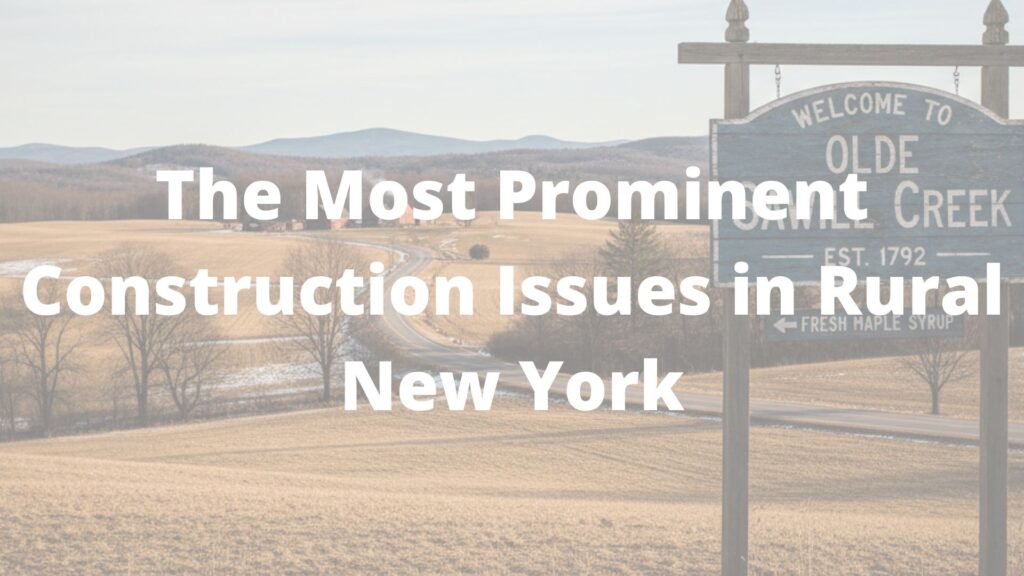
Construction projects in rural New York face a unique set of challenges that differ significantly from those in urban and suburban markets. While development opportunities exist across upstate and rural counties, contractors, property owners, and developers must navigate logistical, regulatory, and economic hurdles that often lead to disputes, delays, and cost overruns.
- Labor Shortages and Workforce Constraints
One of the most pressing issues in rural construction is the shortage of skilled labor. Many rural areas lack a sufficient pool of licensed and experienced tradespeople, forcing contractors to bring in workers from outside the region. This increases labor costs, complicates scheduling, and often leads to project delays.
Labor shortages can also result in rushed work, quality issues, and disputes over performance—frequent sources of construction litigation.
- Transportation and Material Delivery Challenges
Unlike urban areas with easy access to suppliers, rural construction projects often involve long transportation routes for materials and equipment. Poor road conditions, seasonal weather issues, and limited local suppliers all contribute to higher costs and unpredictable delivery timelines.
When material delays occur, disputes often arise over contract deadlines, liquidated damages, and responsibility for increased costs.
- Rising Material Costs and Supply Chain Disruptions
Material price volatility continues to affect construction statewide, but rural projects feel the impact more acutely due to added transportation expenses. Lumber, concrete, aggregates, and steel are often significantly more expensive by the time they reach remote job sites.
Without clear escalation clauses or cost-allocation provisions in construction contracts, these increases frequently lead to claims and litigation.
- Permitting, Zoning, and Local Regulatory Delays
Many rural municipalities operate with limited administrative staff and outdated zoning codes. As a result, permit approvals and inspections may be slow or inconsistently applied. Developers often encounter unexpected delays due to unclear land-use rules or changing interpretations by local officials.
These regulatory challenges can derail project schedules and create legal exposure if not addressed early in the planning phase.
- Housing Development and Affordability Constraints
Rural New York faces a significant shortage of new housing, driven by high construction costs and limited financial incentives. Developers may struggle to make projects economically viable, while homeowners face rising prices and limited contractor availability.
Disputes frequently arise in residential construction involving cost overruns, scope changes, contractor licensing issues, and workmanship claims.
- Infrastructure Limitations
Aging infrastructure—particularly roads, bridges, utilities, and broadband—poses major obstacles to rural development. Limited access to reliable utilities can delay or entirely prevent construction projects from moving forward.
Public infrastructure projects are often dependent on state or federal funding, which can introduce compliance issues, payment disputes, and delays.
- Renewable Energy and Land Use Conflicts
Rural New York has seen increased development of large-scale solar and wind projects. While these projects bring investment, they also raise land-use disputes, zoning challenges, and community opposition.
These developments frequently involve complex contracts, state siting regulations, and litigation over environmental and property rights issues.
- Limited Funding and Financial Risk
Smaller tax bases in rural communities mean fewer resources for public construction and infrastructure maintenance. Private projects often face financing challenges, increasing the risk of stalled construction, contractor nonpayment, and mechanic’s lien disputes.
Construction in rural New York presents distinct legal and practical challenges—from labor shortages and material costs to permitting delays and infrastructure limitations. Without careful contract drafting, proactive legal planning, and experienced counsel, these issues can quickly escalate into costly disputes.
Whether you are a homeowner, contractor, or developer, understanding these risks is essential to protecting your investment and keeping your project on track.

John Caravella Esq., is a construction attorney and formerly practicing project architect at The Law Office of John Caravella, P.C., representing architects, engineers, contractors, subcontractors, and owners in all phases of contract preparation, litigation, and arbitration across New York and Florida. He also serves as an arbitrator to the American Arbitration Association Construction Industry Panel.
The information provided on this website does not, and is not intended to, constitute legal advice; instead, all information, content, and materials available on this site are for general informational purposes only. Readers of this website should contact their attorney to obtain advice with respect to any particular legal matter. No reader, user, or browser of this site should act or refrain from acting on the basis of information on this site without first seeking legal advice from counsel in the relevant jurisdiction. Only your individual attorney can provide assurances that the information contained herein – and your interpretation of it – is applicable or appropriate to your particular situation. Use of, and access to, this website or any of the links or resources contained within the site do not create an attorney-client relationship between the reader, user, or browser and website authors, contributors, contributing law firms, or committee members and their respective employers.