
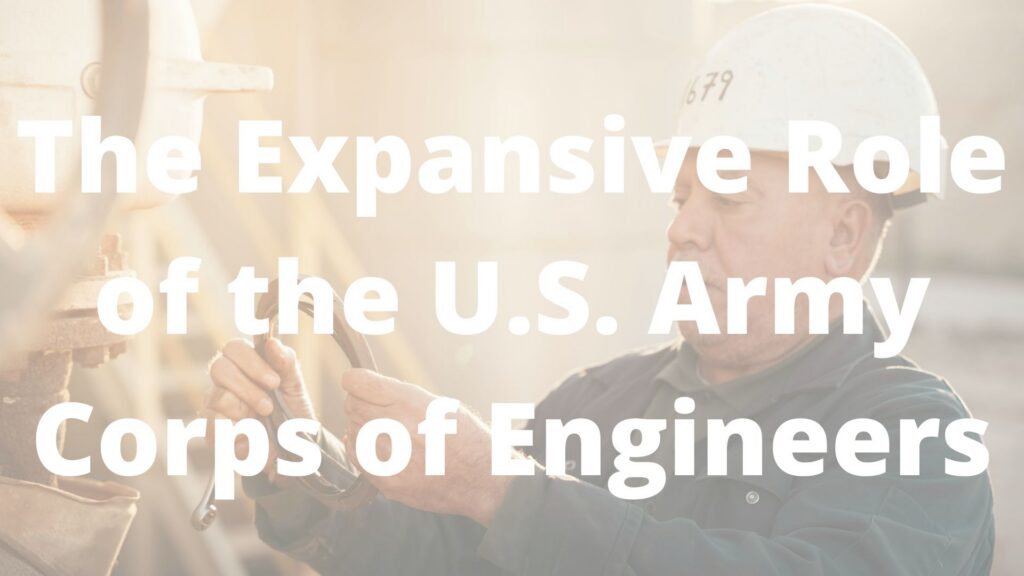
The United States Army Corps of Engineers (USACE) plays a critical and far-reaching role in shaping the built environment across the United States. As a federal agency under the United States Department of Defense, USACE is responsible not only for military construction but also for a wide range of civil works projects that impact infrastructure, environmental sustainability, and economic development nationwide.
At its core, USACE is one of the largest public engineering, design, and construction management agencies in the world. Its work spans planning, designing, building, and maintaining infrastructure such as dams, levees, ports, waterways, and federal buildings. In the construction sector, USACE manages billions of dollars in public projects annually, ensuring that federal facilities, from military bases to courthouses, are delivered efficiently, safely, and in compliance with strict regulatory standards.
From an architectural perspective, USACE collaborates with private-sector architects and engineers to design functional, resilient, and sustainable structures. While the agency itself is heavily engineering-focused, it oversees architectural standards for federal buildings, emphasizing durability, security, and environmental performance. USACE projects often incorporate modern design principles, including energy efficiency, climate resilience, and long-term lifecycle cost management.
Engineering is at the heart of USACE’s mission. The agency is widely known for its expertise in civil and environmental engineering, particularly in water resource management. USACE designs and maintains flood control systems, hurricane protection barriers, and navigation channels that support both public safety and commercial activity. Its involvement in major infrastructure projects, such as coastal restoration, dredging operations, and disaster recovery makes it a cornerstone of national resilience efforts.
USACE also plays a key regulatory role. Under federal laws such as the Clean Water Act, the agency reviews and permits certain types of construction activities that affect wetlands and navigable waters. This regulatory function directly impacts private developers, contractors, and municipalities, ensuring that construction projects comply with environmental protections and do not negatively affect surrounding ecosystems.
One of the most important and defining efforts undertaken by the United States Army Corps of Engineers was its work on the Mississippi River and Tributaries Project, formally authorized by Congress in 1928 following the catastrophic Great Mississippi Flood of 1927. This project marked a turning point in how the United States approached large-scale infrastructure and disaster mitigation.
Through the construction of an extensive system of levees, floodways, dams, and channel improvements, USACE fundamentally reshaped the Mississippi River’s management, protecting millions of residents and vast agricultural and industrial regions from recurring floods. The long-term impact of this initiative cannot be overstated—it not only reduced flood risk and stabilized economic activity along one of the nation’s most critical waterways, but also established USACE as a central authority in civil engineering, water resource management, and large-scale public works across the country.
In addition to its domestic responsibilities, USACE supports international engineering and construction efforts, often assisting with humanitarian and infrastructure development projects abroad. Domestically, the agency is frequently called upon during natural disasters—such as hurricanes and floods—to provide emergency construction, temporary housing, and infrastructure repair.
In conclusion, the United States Army Corps of Engineers is a vital force in the intersection of construction, architecture, and engineering. Its work not only supports national defense but also drives infrastructure development, environmental stewardship, and economic growth. For contractors, developers, and design professionals, understanding the role of USACE is essential, as its influence extends across nearly every facet of the built environment in the United States.

John Caravella Esq., is a construction attorney and formerly practicing project architect at The Law Office of John Caravella, P.C., representing architects, engineers, contractors, subcontractors, and owners in all phases of contract preparation, litigation, and arbitration across New York and Florida. He also serves as an arbitrator to the American Arbitration Association Construction Industry Panel. Mr. Caravella can be reached by email: [email protected] or (631) 608-1346.
The information provided on this website does not, and is not intended to, constitute legal advice; instead, all information, content, and materials available on this site are for general informational purposes only. Readers of this website should contact their attorney to obtain advice with respect to any particular legal matter. No reader, user, or browser of this site should act or refrain from acting on the basis of information on this site without first seeking legal advice from counsel in the relevant jurisdiction. Only your individual attorney can provide assurances that the information contained herein – and your interpretation of it – is applicable or appropriate to your particular situation. Use of, and access to, this website or any of the links or resources contained within the site do not create an attorney-client relationship between the reader, user, or browser and website authors, contributors, contributing law firms, or committee members and their respective employers.
Resources
- United States Army Corps of Engineers
- United States Department of Defense
- Clean Water Act (U.S. federal law governing water pollution and permitting)