

The story of America is, in many ways, the story of its builders. Every century has produced construction projects that transformed the nation’s economy, connected its people, and shaped its future. From the creation of government institutions in the nation’s infancy to modern infrastructure networks that support millions of Americans every day, landmark construction projects have served as symbols of progress and innovation. As the United States celebrates 250 years of independence, it is worth examining some of the most influential construction achievements that helped define each era of American history.
The 18th Century: Building a Nation
The United States Capitol
As the newly formed United States established itself following the Revolutionary War, one of its most important construction projects was the United States Capitol in Washington, D.C. Construction began in 1793 and represented far more than a government building. It embodied the ideals of democracy and national unity.
Built using neoclassical architectural principles inspired by ancient Greece and Rome, the Capitol became the physical center of the federal government. The project required skilled craftsmen, stonemasons, carpenters, and laborers whose work laid the foundation for the nation’s political future.
The White House
Construction of the White House began in 1792 and created the official residence of the President of the United States. Together with the Capitol, it established the architectural identity of the nation’s capital and demonstrated America’s ambitions as an emerging world power.
The 19th Century: Connecting and Expanding America
The Erie Canal
Completed in 1825, the Erie Canal stands among the most important infrastructure projects in American history. Stretching across New York State, the canal connected the Great Lakes to the Hudson River and the Atlantic Ocean.
The canal dramatically reduced shipping costs and travel times, opening the interior of the country to trade and settlement. It helped transform New York City into America’s leading commercial hub and sparked economic growth throughout the Northeast and Midwest.
The Transcontinental Railroad
The completion of the Transcontinental Railroad in 1869 forever changed the United States. By linking the eastern and western regions of the country, the railroad accelerated commerce, migration, and industrial development.
The project required immense engineering efforts, including the construction of tunnels through mountains, bridges across rivers, and thousands of miles of track across rugged terrain. It remains one of the most significant transportation projects ever completed in North America.
The Brooklyn Bridge
Opened in 1883, the Brooklyn Bridge was one of the greatest engineering achievements of its time. The bridge connected Manhattan and Brooklyn, demonstrating the possibilities of steel-wire suspension bridge technology.
Beyond its practical function, the bridge became a symbol of American ingenuity and urban growth during the Industrial Revolution.
The 20th Century: Engineering on a Grand Scale
The Panama Canal
Completed in 1914, the Panama Canal represented one of the most ambitious engineering projects in world history. By creating a passage between the Atlantic and Pacific Oceans, the canal revolutionized global shipping and trade.
American engineers overcame significant geographic, logistical, and public health challenges to complete the project, establishing new standards for large-scale construction management.
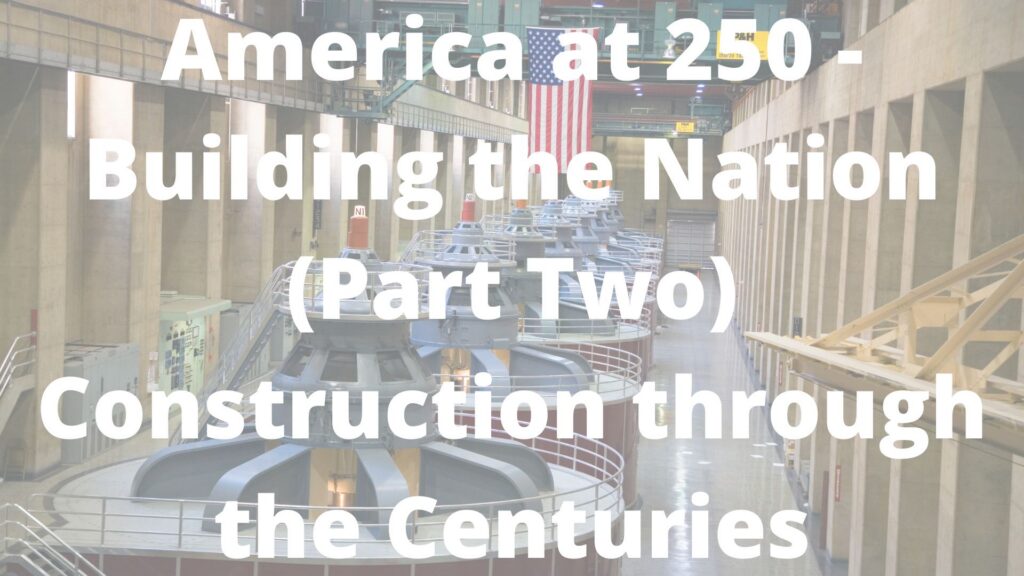
Hoover Dam
Completed during the Great Depression, Hoover Dam transformed the American Southwest by providing flood control, water storage, and hydroelectric power.
The project employed thousands of workers and demonstrated the federal government’s ability to undertake massive public works projects during difficult economic times.
The Interstate Highway System
Authorized in 1956, the Interstate Highway System became the largest public works project in American history. Thousands of miles of highways connected cities, suburbs, ports, military installations, and industrial centers.
The system fundamentally changed how Americans lived, worked, and traveled while driving economic growth throughout the country.
The Modern Skyscraper Era
Projects such as the Empire State Building, the former World Trade Center, and Chicago’s Willis Tower showcased advances in structural steel, elevators, and engineering design. These buildings redefined city skylines and cemented America’s reputation as a leader in high-rise construction.
The 21st Century: Building for the Future
Airport Modernization Projects
Major airports across the country have undergone significant expansions and renovations to accommodate growing passenger demand and improve efficiency. Projects at airports in New York, Los Angeles, and other major cities represent billions of dollars in infrastructure investment.
Renewable Energy Facilities
Wind farms, solar installations, and energy storage projects have become defining construction initiatives of the twenty-first century. These facilities support America’s transition toward diversified energy production while creating jobs and stimulating local economies.
Data Centers and Digital Infrastructure
As the economy becomes increasingly digital, data centers have emerged as critical infrastructure assets. These facilities support cloud computing, artificial intelligence, telecommunications, and online commerce, making them among the most important construction sectors of the modern era.
Bridge and Infrastructure Renewal
Many of America’s bridges, highways, transit systems, and water infrastructure networks are undergoing modernization. These projects aim to improve safety, increase resilience, and ensure that critical infrastructure can support future generations.
For 250 years, construction projects have reflected America’s ambitions, challenges, and achievements. From the construction of the Capitol and White House to canals, railroads, dams, highways, airports, and data centers, each generation has built infrastructure that shaped the nation’s growth.
These landmark projects not only solved immediate needs but also created opportunities for future development. As America enters its next chapter, today’s builders, engineers, architects, and construction professionals continue a long tradition of creating the structures and systems that will define the country’s future. The story of American construction is ultimately a story of innovation, perseverance, and progress, one project at a time.

John Caravella Esq., is a construction attorney and formerly practicing project architect at The Law Office of John Caravella, P.C., representing architects, engineers, contractors, subcontractors, and owners in all phases of contract preparation, litigation, and arbitration across New York and Florida. He also serves as an arbitrator to the American Arbitration Association Construction Industry Panel.
The information provided on this website does not, and is not intended to, constitute legal advice; instead, all information, content, and materials available on this site are for general informational purposes only. Readers of this website should contact their attorney to obtain advice with respect to any particular legal matter. No reader, user, or browser of this site should act or refrain from acting on the basis of information on this site without first seeking legal advice from counsel in the relevant jurisdiction. Only your individual attorney can provide assurances that the information contained herein – and your interpretation of it – is applicable or appropriate to your particular situation. Use of, and access to, this website or any of the links or resources contained within the site do not create an attorney-client relationship between the reader, user, or browser and website authors, contributors, contributing law firms, or committee members and their respective employers.
Resources
- National Park Service – Historic American Buildings Survey (HABS)
- Library of Congress Digital Collections
- National Archives and Records Administration
- U.S. Capitol Historical Society
- Smithsonian Institution Archives
- American Society of Civil Engineers (ASCE)
- Federal Highway Administration – Highway History Collection
- U.S. Bureau of Reclamation – Hoover Dam History
- Erie Canal Museum
- National Railroad Hall of Fame
- U.S. Department of Transportation
- U.S. Department of Energy
- Brookings Institution Infrastructure Reports
- Congressional Research Service Infrastructure Publications
- National Building Museum