

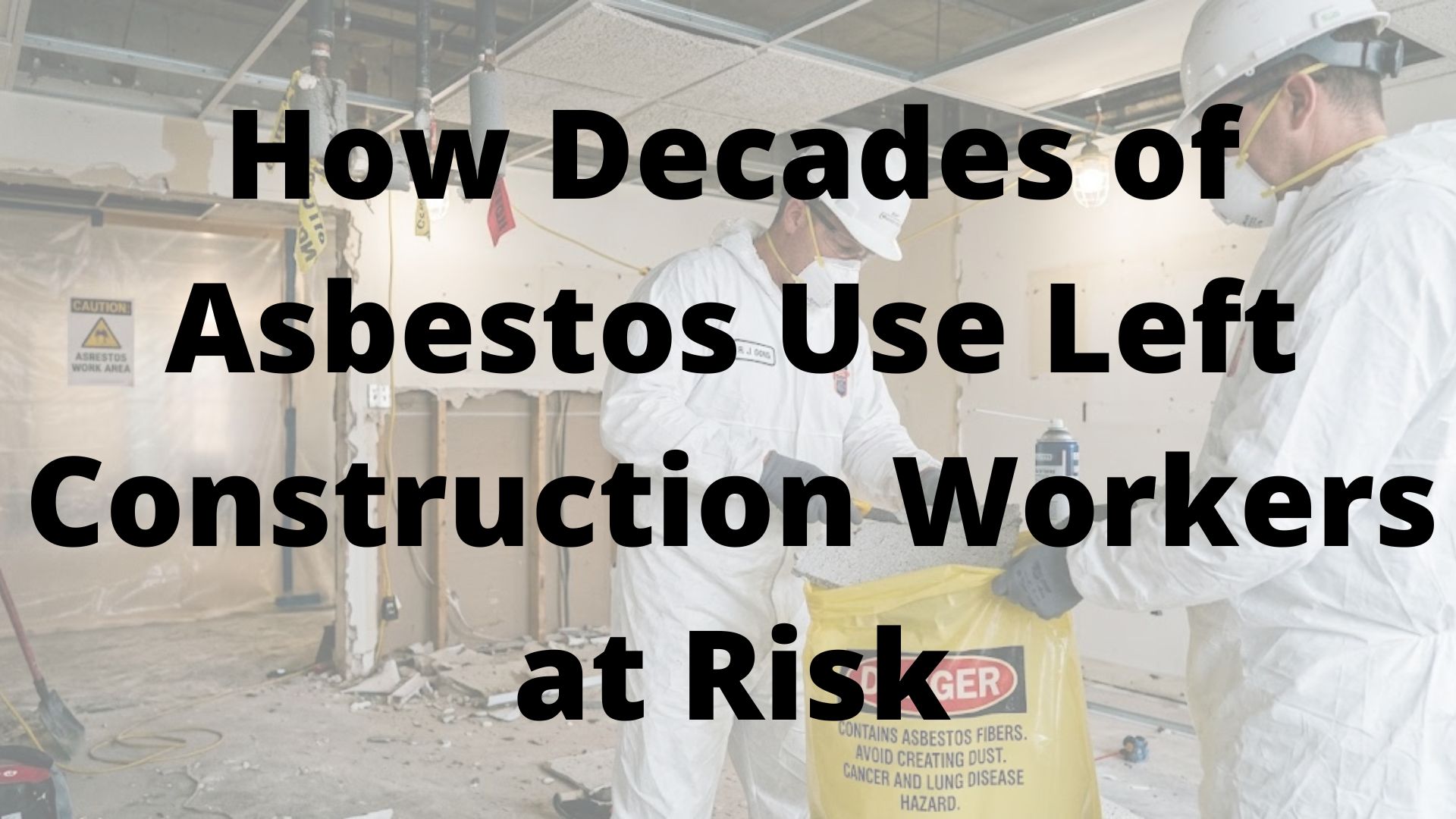
For much of the 20th century, asbestos was celebrated as a miracle material in the construction industry. It was inexpensive, highly fire-resistant, tensile, and an exceptional thermal insulator. Starting from the post WWII construction boom and up through the late 1980s, asbestos found its way into almost every stage of building construction.
Decades later, a devastating medical reality has emerged: thousands of construction workers, tradespeople, and contractors who handled these materials are developing malignant mesothelioma—a rare and aggressive cancer affecting the protective lining of the lungs, abdomen, or heart.
Where Was Asbestos Used in Past Construction?
Prior to regulatory restrictions, asbestos-containing building materials (ACBMs) were widespread. Workers rarely wore respiratory protection because the long-term dangers were downplayed or obscured by manufacturers.
Common building components that frequently contained asbestos include:
- Thermal & Pipe Insulation: Block insulation, pipe wrapping, and spray-applied fireproofing.
- Drywall & Finishing: Joint compounds, spackling, plasters, and textured ceiling spray (popcorn ceilings).
- Flooring: Vinyl floor tiles, asphalt tiles, and linoleum backing adhesives.
- Roofing & Siding: Asbestos-cement shingles, siding panels, felt, and roofing caulks.
- Adhesives & Sealants: Mastics, putties, and furnace cements.
When tradespeople cut, sanded, mixed, or demolished these products, invisible microscopic asbestos fibers were released into the air.
How Inhaled Fibers Lead to Mesothelioma
Unlike larger particles that the human respiratory system can clear, microscopic asbestos fibers are needle-like. When inhaled, they bypass the upper airways and embed deep within the lung tissue or settle in the pleura (the outer lining of the lungs and chest cavity).
Once lodged, these fibers cannot be broken down by the body. Over time, they trigger continuous cellular irritation, chronic inflammation, and genetic damage, eventually causing normal cells to mutate into cancerous tumors.
The Latency Period Factor
One of the most dangerous traits of mesothelioma is its long latency period. Symptoms typically do not appear until 20 to 50 years after initial exposure. Because of this delay, a tradesperson exposed on job sites during the 1970s or 1980s may only be diagnosed today.
Secondary Exposure: The Risk at Home
The danger was not confined to construction sites. Workers often returned home with asbestos dust coating their hair, work boots, and clothing. Spouses who shook out laundry or children who hugged their parents after a shift suffered take-home or secondary asbestos exposure, which has resulted in mesothelioma diagnoses decades later.
Ongoing Hazards in Renovation and Modern Trades
Though new production of many asbestos products decreased dramatically following late-20th-century regulations, old asbestos remains in millions of existing structures. Modern construction, demolition, and renovation crews regularly encounter hidden asbestos when working on buildings erected prior to the 1990s.
If asbestos is undisturbed, it poses minimal risk; however, drilling, cutting, tearing down, or improperly removing older construction materials instantly renders the fibers friable and airborne.
Modern construction prioritizes occupant health, indoor air quality, structural durability, and fire safety. Rather than relying on materials that off-gas volatile organic compounds (VOCs), contain synthetic resins (like formaldehyde), or degrade into toxic dust, today’s safe building choices leverage non-emitting natural elements, advanced bio-based materials, and non-toxic engineered alternatives.
Non-Toxic Structural & Framing Materials
- Mass Timber / Cross-Laminated Timber (CLT): Engineered from thick, glued layers of solid wood, mass timber offers exceptional strength and fire resistance (forming a protective char layer rather than melting) while storing carbon and avoiding synthetic chemical treatments.
- Low-Carbon / Alternative Concrete: Replaces standard Portland cement with mineral compounds or fly-ash-free formulations, avoiding heavy off-gassing while providing structural mass and mold resistance.
- 3D-Printed Mineral / Clay Structures: Utilizes natural clay, sand, or calcium-based mortars to construct wall envelopes. These materials are inherently non-combustible and completely free of toxic binders.
Safe & Breathable Insulation
Conventional insulations historically relied on synthetic resins or chemical flame retardants. Safe modern alternatives include:
- Wool Insulation: Naturally flame-resistant without added chemicals, antimicrobial, and capable of absorbing airborne toxins like formaldehyde.
- Formaldehyde-Free Fiberglass / Mineral Wool: Made from basalt rock or spun glass without urea-formaldehyde binders, offering non-combustible thermal protection without degrading air quality.
- HempLime (Hempcrete): A mixture of hemp hurd, lime, and water that creates a breathable, carbon-negative, mold-proof, and fire-resistant wall infill.
- Expanded Cork Board: Harvested from oak bark, expanded cork provides thermal and acoustic insulation without requiring synthetic glue or chemical treatments.
Comprehensive guides, diagnostic explanations, legal options, and support groups specifically dedicated to patients and families navigating an asbestos-related diagnosis can be found at Mesothelioma.net.

John Caravella Esq., is a construction attorney and formerly practicing project architect at The Law Office of John Caravella, P.C., representing architects, engineers, contractors, subcontractors, and owners in all phases of contract preparation, litigation, and arbitration across New York and Florida. He also serves as an arbitrator to the American Arbitration Association Construction Industry Panel.
The information provided on this website does not, and is not intended to, constitute legal advice; instead, all information, content, and materials available on this site are for general informational purposes only. Readers of this website should contact their attorney to obtain advice with respect to any particular legal matter. No reader, user, or browser of this site should act or refrain from acting on the basis of information on this site without first seeking legal advice from counsel in the relevant jurisdiction. Only your individual attorney can provide assurances that the information contained herein – and your interpretation of it – is applicable or appropriate to your particular situation. Use of, and access to, this website or any of the links or resources contained within the site do not create an attorney-client relationship between the reader, user, or browser and website authors, contributors, contributing law firms, or committee members and their respective employers.