

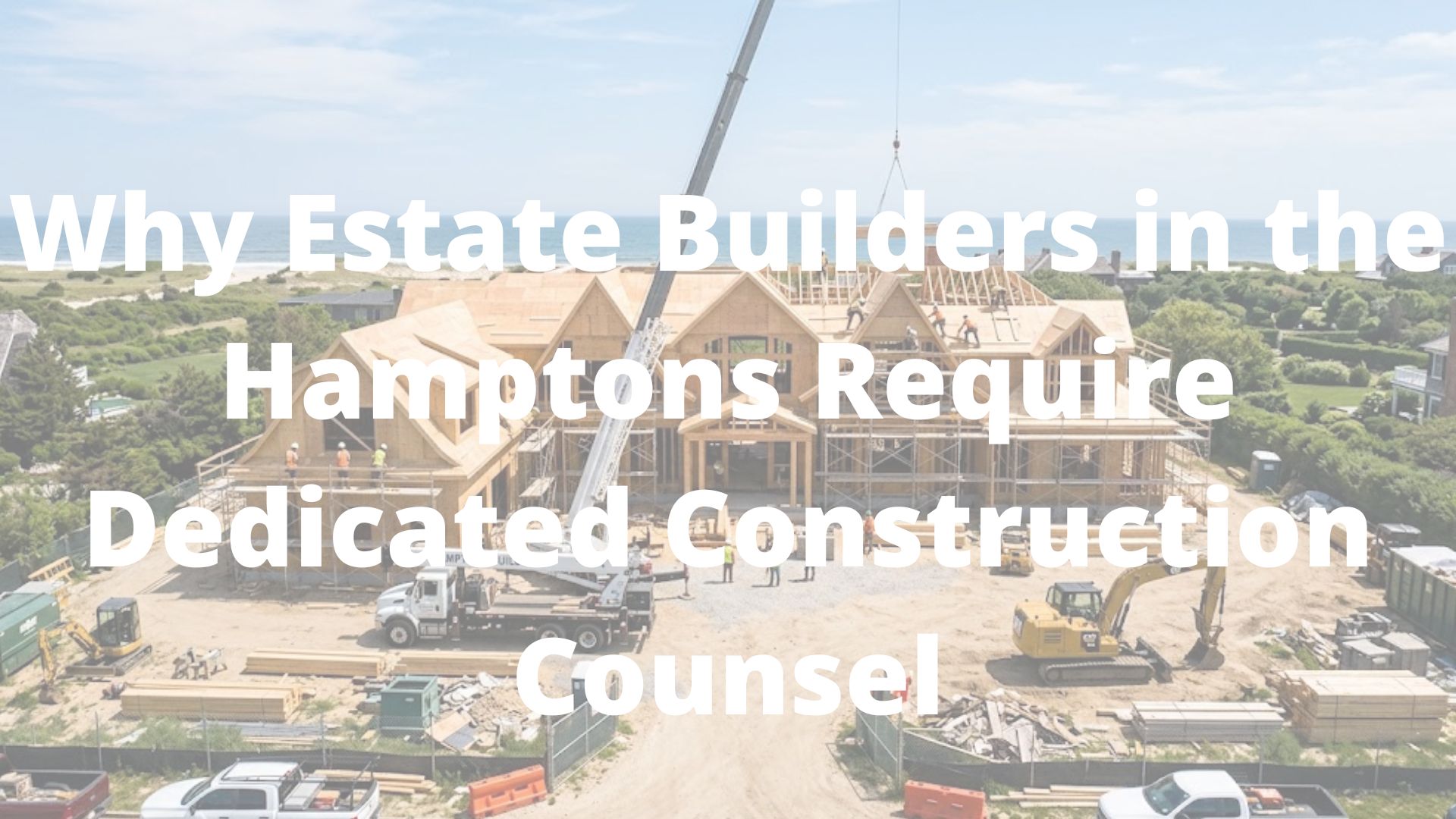
Building custom ultra-luxury estates in East Hampton, Southampton, and Sagaponack is as much a legal and regulatory tightrope as it is an architectural triumph. For builders operating in North America’s most exclusive residential enclave, legal counsel is not an emergency option—it is essential operational infrastructure.
The East End of Long Island represents one of the most lucrative and complex residential real estate markets in the world. Developing multi-million dollar estates and oceanfront compounds involves extraordinary capital outlay, uncompromising high-net-worth clients, tight zoning parameters, and delicate environmental ecosystems. In this high-stakes environment, construction delays or contractual ambiguities do not merely reduce profit margins—they jeopardize corporate reputation and expose firms to immense financial liabilities.
Retaining dedicated legal counsel specializing in construction and land use law is a fundamental business strategy for luxury estate and mansion builders in the Hamptons. Below is an in-depth analysis of why legal representation is essential for premier builders in the region.
Navigating Hyper-Local Zoning & Environmental Regulations
The Hamptons are governed by an intricate web of municipal codes across villages (such as Sag Harbor, Quogue, or East Hampton Village) and townships (Southampton, East Hampton, Shelter Island). What is permitted on a lot in the Town of Southampton may trigger immediate stop-work orders in a neighboring incorporated village. Furthermore, local regulations frequently clash with or exceed New York State baseline codes.
Key regulatory challenges include:
- Zoning and Massing Restrictions: Strict lot coverage limits, gross floor area (GFA) caps, setback rules, and height restrictions designed to preserve community character.
- Environmental and Coastal Conservation: Regulations mandated by the New York State Department of Environmental Conservation (DEC), local wetlands boards, and coastal erosion hazard area rules protecting dune structures and groundwater.
- Historic District Compliance: Strict Architectural Review Board (ARB) standards governing materials, facades, and historic integrity in established hamlets.
Having dedicated legal counsel ensures that zoning variances, environmental permits, and municipal site approvals are secured properly before ground is broken. It prevents costly shut-downs resulting from municipal misunderstandings or local stop-work orders.
Crafting Contracts Tailored to High-Net-Worth Clients
Standard industry construction contracts—such as generic AIA agreements—are rarely sufficient for custom mansion builds priced between $10 million and $50+ million. High-net-worth clients, family offices, and owner’s representatives operate through teams of attorneys whose primary goal is to shift maximum risk onto the builder.
A dedicated construction attorney crafts customized client agreements that protect the builder’s interests across several vital areas:
- Scope Creep and Change Orders: High-end builds undergo constant architectural modifications. Without ironclad, written change-order clauses specifying costs, timeline expansions, and payment terms, builders often end up financing luxury upgrades out-of-pocket.
- Allowances and Material Costs: Volatility in imported luxury finishes, custom millwork, and specialized stonework requires protective escalation clauses and realistic allowance structures.
- Substantial Completion and Punch List Dispute Resolution: Defining precisely when a mansion is “substantially complete” prevents clients from withholding massive final retainage payments over minor cosmetic touch-ups.
Managing Subcontractor Relationships & Mechanic’s Liens
A mansion builder’s reputation depends on their network of master craftspeople, specialized trades, and luxury vendors. However, managing dozens of sub-tier agreements on a single estate project creates significant legal exposure.
Construction counsel protects the primary general contractor by enforcing rigorous subcontractor agreements that include comprehensive indemnification, strict insurance qualification (naming the builder as an additional insured), and mandatory lien waivers prior to progress payments. Should a payment dispute arise between a subcontractor and a vendor, legal counsel can swiftly bond off mechanic’s liens to ensure client financing remains unencumbered and title remains clear.
Mitigating Risk, Insurance Exposure, and Defect Claims
Custom homes built near coastal zones face harsh environmental elements—salt air, high winds, and high water tables—making water intrusion and structural integrity continuous focal points. Luxury homeowners are quick to initiate multi-million dollar construction defect lawsuits over minor moisture intrusion, HVAC imbalances, or cosmetic settling.
Retaining an attorney ensures that your company maintains proactive risk management protocols. This includes structuring proper corporate entities (such as single-purpose entities for specific estate projects), verifying specialized Wrap-Up/OCIP/CCIP insurance policies, and ensuring all warranties are clearly drafted with defined liability limitations.
Legal Counsel as a Growth Partner
For luxury builders in the Hamptons, legal representation is not merely an expense incurred during a lawsuit; it is a vital safeguard that preserves reputation, cash flow, and equity. By aligning with experienced construction counsel, estate builders can focus on delivering world-class craftsmanship while resting assured that their business model, contracts, and regulatory standing are completely secure.

John Caravella Esq., is a construction attorney and formerly practicing project architect at The Law Office of John Caravella, P.C., representing architects, engineers, contractors, subcontractors, and owners in all phases of contract preparation, litigation, and arbitration across New York and Florida. He also serves as an arbitrator to the American Arbitration Association Construction Industry Panel. Mr. Caravella can be reached by email: [email protected] or (631) 608-1346.
The information provided on this website does not, and is not intended to, constitute legal advice; instead, all information, content, and materials available on this site are for general informational purposes only. Readers of this website should contact their attorney to obtain advice with respect to any particular legal matter. No reader, user, or browser of this site should act or refrain from acting on the basis of information on this site without first seeking legal advice from counsel in the relevant jurisdiction. Only your individual attorney can provide assurances that the information contained herein – and your interpretation of it – is applicable or appropriate to your particular situation. Use of, and access to, this website or any of the links or resources contained within the site do not create an attorney-client relationship between the reader, user, or browser and website authors, contributors, contributing law firms, or committee members and their respective employers.
Resources:
East End & Municipal Code Frameworks:
Town of East Hampton Code & Village Zoning Ordinances (FAR Limits, Lot Coverage & Heights)
Town of Southampton Code & Board of Trustees Coastal Regulations
Village of Sag Harbor Historic Preservation & Architectural Review Board (ARB) Guidelines
New York State Environmental & Land Use Regulations:
New York State Department of Environmental Conservation (NYS DEC) – 6 NYCRR Part 505: Coastal Erosion Management Regulations
New York State Environmental Conservation Law (ECL) Article 34 – Coastal Erosion Hazard Areas
New York Environmental Quality Review Act (SEQRA) Guidance
New York State Construction & Lien Law:
New York Consolidated Laws, Lien Law § 19(4) – Discharge of Mechanic’s Lien by Filing Bond
New York Consolidated Laws, Lien Law § 39 – Lien Void for Willful Exaggeration
New York Consolidated Laws, Lien Law § 59 – Vacating Liens for Failure to Prosecute
Standard Contractual & Legal References:
American Institute of Architects (AIA) Contract Documents (Custom High-End Contract Modifications)
New York State Bar Association (NYSBA) Real Property & Construction Law Section Resources